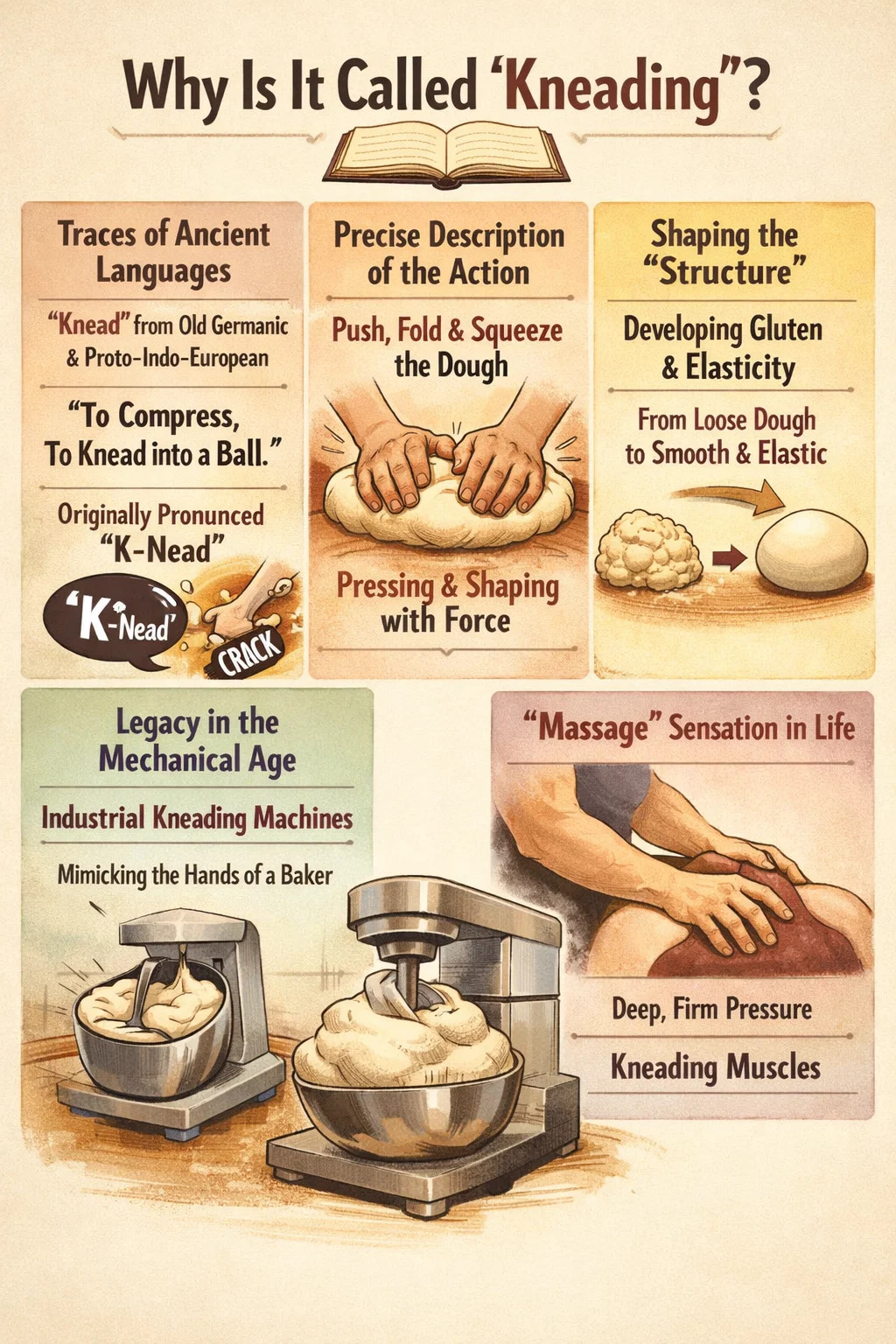


Per quanto riguarda il motivo per cui questo movimento di "sfregamento e pressione" si chiama impastare, c'è una storia dell'evoluzione linguistica e una descrizione molto vivida dell'azione che sta dietro ad esso. La parola è persistita fino ad oggi perché cattura accuratamente l'essenza di questo tipo di operazione.
Possiamo guardare all'origine di questo nome da diverse prospettive interessanti:
1. Tracce di lingue antiche
Questa parola ha una storia molto lunga, le sue radici risalgono alle antiche lingue tedesche e indoeuropee.
Significato originale: nella sua forma più antica, l'antenato di questa parola significava "comprimere" o "impastare fino a formare una palla".
Evoluzione della pronuncia: sebbene ci sia una "K" silenziosa nell'ortografia attuale, molto tempo fa, quella "K" veniva pronunciata, suonando come il suono nitido delle ossa o delle articolazioni quando viene applicata la forza.
2. Descrizione precisa dell'azione
Il motivo per cui si chiama così è perché l'azione non è semplicemente un'agitazione, ma una combinazione di movimenti.
Spingere e tirare: Quando tu (o a macchina impastatrice ) stanno funzionando, l'azione consiste nello spingere fuori l'impasto con la base del palmo della mano e poi ripiegarlo.
Sensazione di compressione: questo nome esprime vividamente la sensazione di "premere con forza qualcosa per farlo fondere insieme". Se mescoli semplicemente qualcosa nell'acqua con un bastoncino, si sta mescolando; solo quando usi tutta la forza del tuo corpo per affrontare quella massa appiccicosa si chiama impastare.
3. Modellare la "struttura"
Nella cultura della preparazione dei cibi a base di pasta, questo nome porta il significato di "dare vita".
Sviluppo del glutine: la farina stessa è sciolta; solo attraverso l'impasto continuo gli ingredienti si uniscono come una rete intrecciata, creando elasticità.
Cambiamento di consistenza: questa trasformazione da "un mucchio di particelle sciolte" a "elasticità" era considerata un'operazione potente dagli antichi, quindi questa parola era usata appositamente per distinguerla dalla semplice miscelazione.
4. L'eredità nell'era meccanica
Quando arrivò la rivoluzione industriale e le persone inventarono le macchine per sostituire il lavoro manuale, ereditarono naturalmente questa parola.
Personificazione: sebbene le impastatrici industriali siano realizzate in acciaio, le loro pale imitano le azioni di spinta, compressione, strappo e trazione delle mani umane. Definizione della funzione: questo nome è stato scelto per informare gli utenti che questa macchina non è per frullare il succo, ma piuttosto per "impastare ingredienti pesanti" come un abile artigiano.
5. La sensazione del "massaggio" nella vita quotidiana
È interessante notare che in inglese questa parola viene talvolta utilizzata per descrivere il massaggio dei tessuti profondi.
Ciò indica che il nome porta intrinsecamente la caratteristica di "penetrare in profondità e applicare ripetutamente pressione". Che si tratti di impastare o massaggiare i muscoli, il processo di ammorbidimento e omogeneizzazione dei tessuti attraverso la pressione rientra nella categoria dell'impasto.